
DigitX cut-resistant glovesMore cut,
less thickness
Five new references with our own QRO™ fibre. Two cut levels, two coatings and two gauges, all pulling in the same direction: raising the cut level without thickening the fabric. Dual certification: EN 388 and ANSI/ISEA 105-2024.
- 61-70 OMNILUX
- 64-52 PUROLUX-D
- 63-70 PUROLUX-F
- 63-80 NITQROLUX-D
- 64-80 NITQROLUX-F
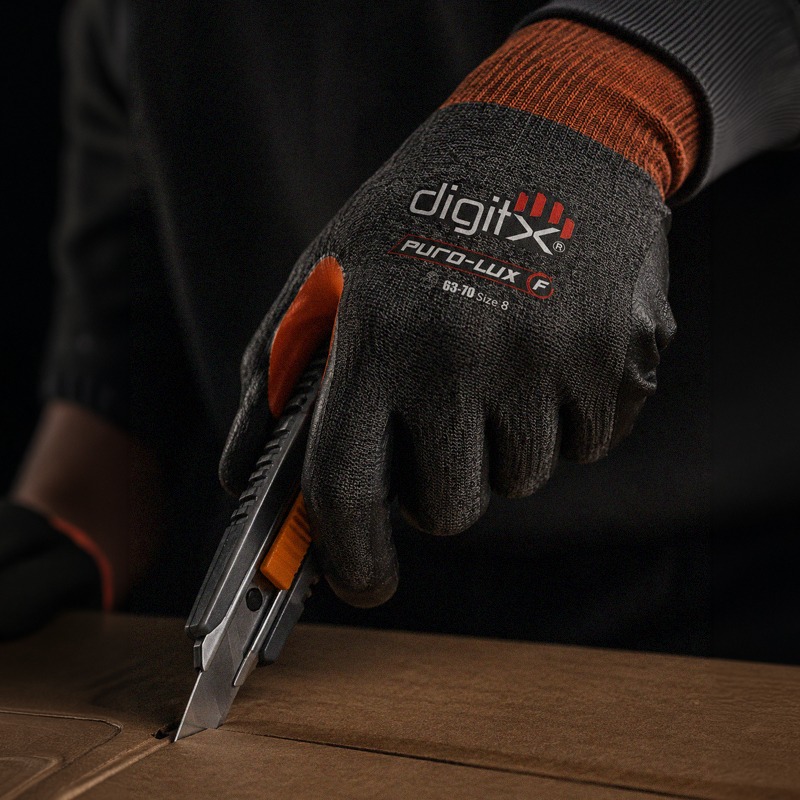
QRO-Flex®: the fibre that raises the cut level without thickening the fabric
Latest-generation knitting technology that delivers maximum cut resistance while keeping extreme flexibility and a second-skin fit.
Our own fibre
Raises the cut level while keeping elasticity and fit. Until now, more cut meant more thickness; with this fibre the level goes up without thickening the fabric.
Reinforcement between thumb and index finger
This is where most gloves fail. It is reinforced on all five references in the range.
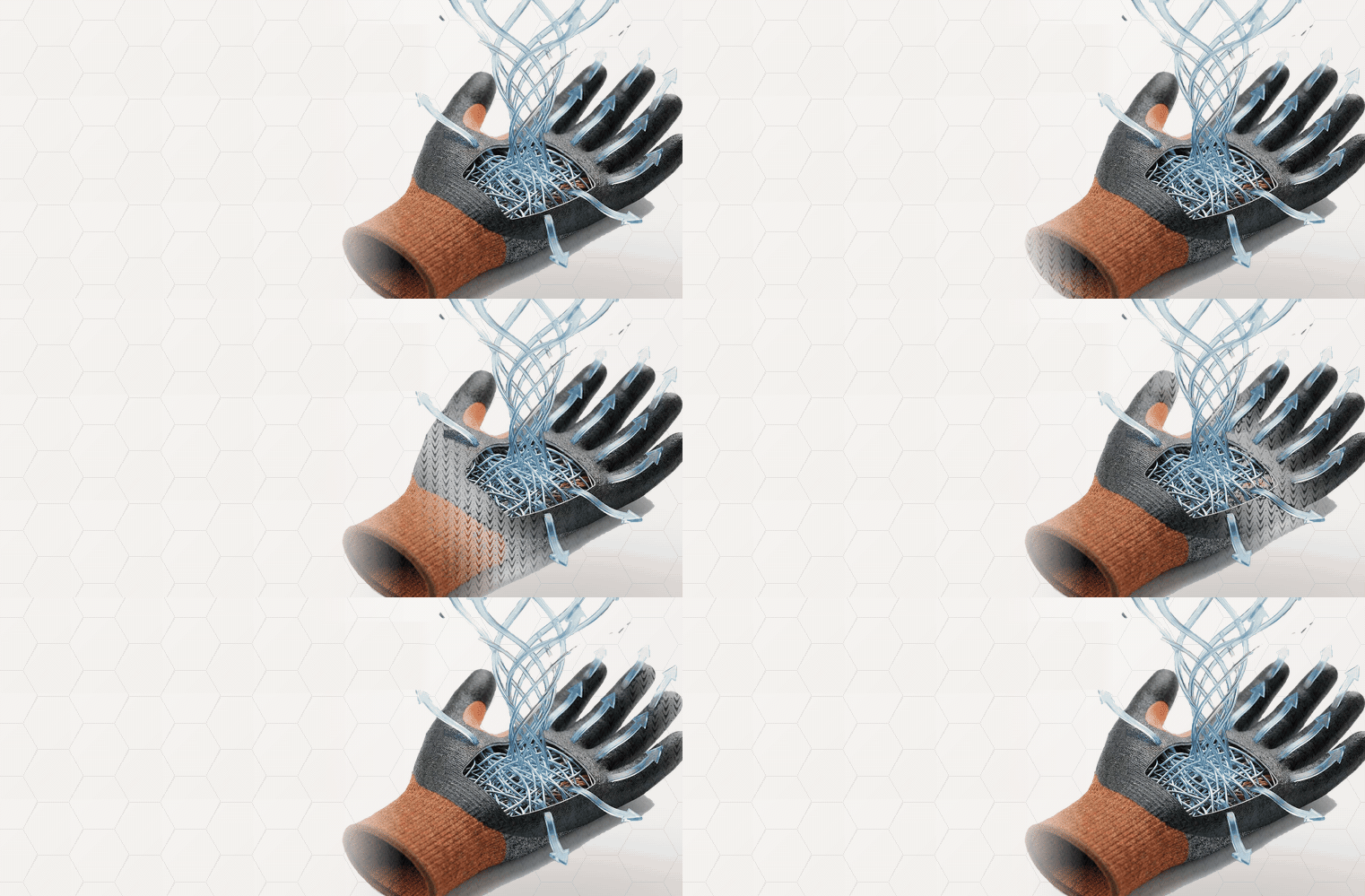
Touchscreen compatible and breathable
Works with screens and handheld terminals. The nitrile range also offers contact heat up to 100 °C to EN 407 level 1.
Reinforced durability
Over 20,000 cycles against the 8,000 that top the European standard. Plenty of gloves are rated 4; very few are rated 6.
Browse the complete DigitX range
These five references are the new arrivals, but they are not everything: DigitX is a catalogue devoted solely to hand protection. You can see it in full on the website or download it as a PDF.
The fabric does the work
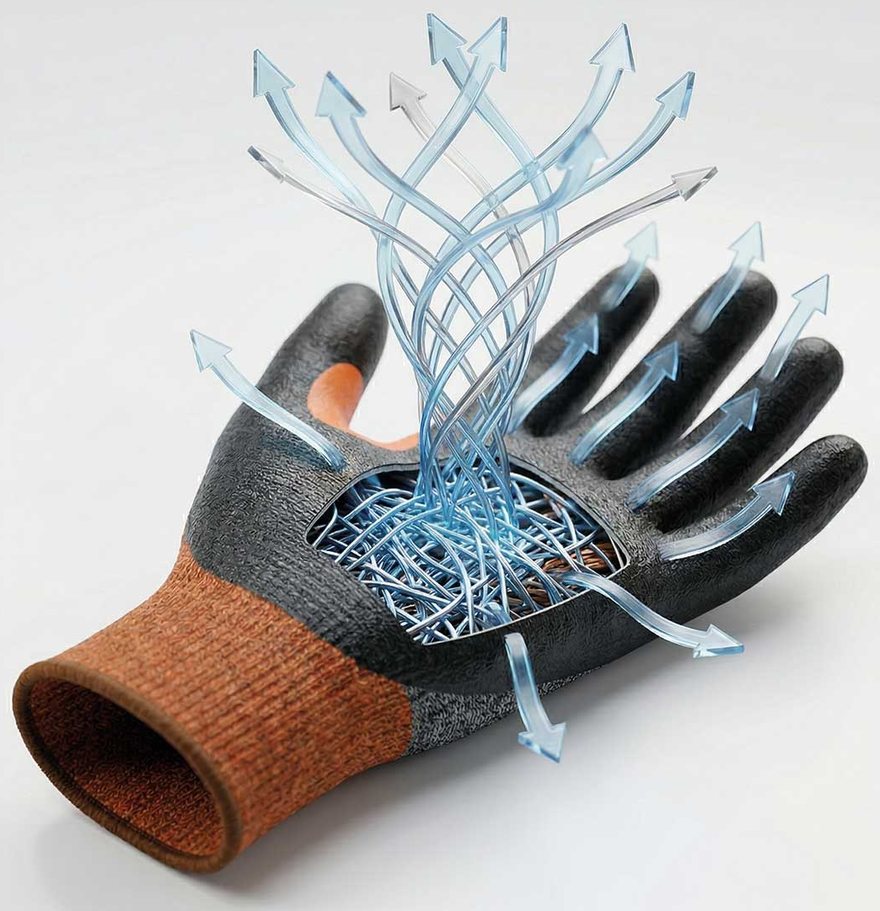
Underneath the coating there is a liner knitted in gauge 18 —gauge 24 on the 61-70—. The QRO™ fibre raises the cut level and lets that liner keep flexing and breathing.
- Gauge 1824 on the 61-70
- Cut D or F15 or 30 N
- Breathableand touchscreen ready
Gauge 18 and gauge 24: what really changes
The gauge is the number of needles per inch on the knitting machine. The higher the gauge, the finer the yarn, the thinner the fabric and the better the feel.
More cut no longer means more thickness
Moving up a level used to mean thickening the fabric. With QRO™ fibre the level goes up and the thickness stays where it was.
The sweet spot
Cut D or F with enough dexterity for fasteners, sheet metal and assembly. It is the gauge of four of the five references.
As close as it gets to working bare-handed
The first gauge 24 liner in the catalogue. It is the closest thing to working bare-handed available today at cut level D.
A glove that gets in the way ends up in a pocket
And a glove in a pocket protects exactly as much as no glove at all. Thickness is the number one reason gloves are abandoned, ahead of price.
61-70 OMNILUX: the first gauge 24 liner with cut level D
It is the thinnest reference in the catalogue at cut level D, and the one with the best feel. It fits in where no glove fits today: the workstations where people work bare-handed because anything else gets in the way.
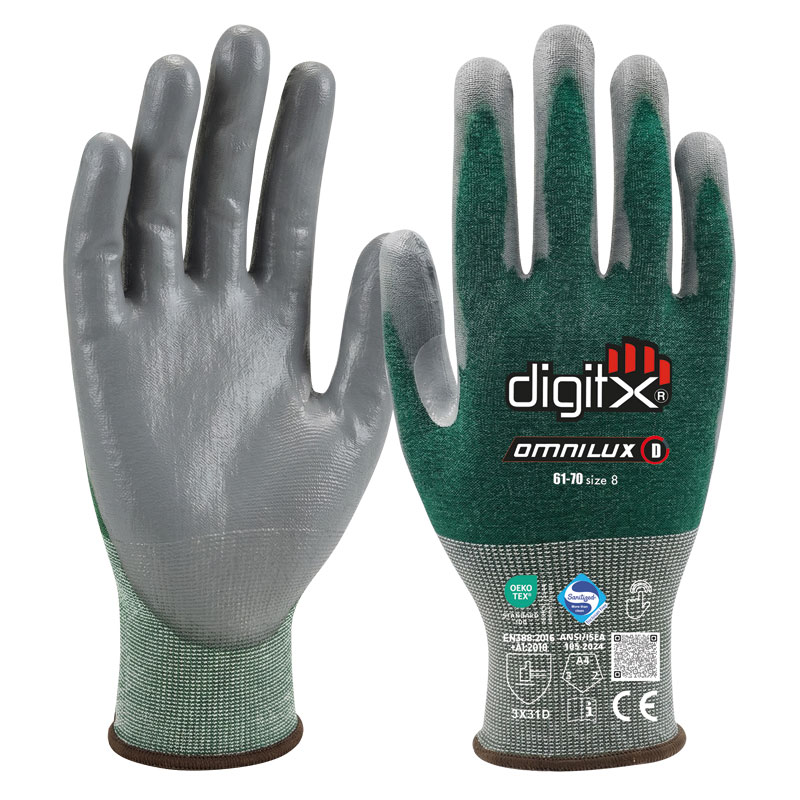
- 24GLiner gauge
- DTDM cut · 15 N
- A4ANSI 105-2024
- Gauge 24 liner: the first in the catalogue at that thickness, with cut level D maintained.
- Satin finish and breathable, with PU coating on the palm only.
- OEKO-TEX® certification confirming the absence of harmful substances in contact with the skin.
- Touchscreen ready: works with screens, handheld terminals and tablets without taking the glove off.
- EN 388 3X31D · ANSI/ISEA 105-2024 A4-3-2 · sizes 5 to 11.
The higher the number, the finer the yarn and the thinner the fabric.
Fine assembly, electronics, connectors, wiring, automotive interior clips and inspection: everything that is done bare-handed today because the glove gets in the way.
The five references, in one table
All of them share QRO™ fibre, thumb reinforcement, touchscreen compatibility, a minimum order of 12 pairs and a 144-pair box. What changes is the coating, the gauge and the cut level.
| Reference | Gauge | Coating | EN 388 | ANSI cut | Extra | Sizes |
|---|---|---|---|---|---|---|
| 61-70 OMNILUX | 24 | PU on palm | 3X31D | A4-3-2 | OEKO-TEX®, satin finish | 5-11 |
| 64-52 PUROLUX-D | 18 | PU on palm and fingers | 4X42D | A4-6-3 | Thumb reinforcement | 5-11 |
| 63-70 PUROLUX-F | 18 | PU on palm and fingers | 4X42F | A6-5-3 | Thumb reinforcement | 5-11 |
| 63-80 NITQROLUX-D | 18 | Nitrile | 4X42D | A4-6-3 | EN 407 X1XXXX · 100 °C | 6-12 |
| 64-80 NITQROLUX-F | 18 | Nitrile | 4X42F | A6-6-3 | EN 407 X1XXXX · 100 °C | 6-12 |
Two decisions and the reference picks itself: what the environment at the workstation is like and what cut level is needed.
How to choose, in two questions
The choice starts with the environment at the workstation, not with the cut level in the catalogue.
What is the environment at the workstation?
Finer feel and very good grip in the dry. OMNILUX and PUROLUX.
It grips where PU saturates, and it adds EN 407 level 1: 100 °C contact heat for 15 s. NITQROLUX.
How much cut resistance is needed?
General issue. Cut is present, but it is not the dominant risk at the workstation.
Critical workstation: sheet metal with burrs, live edges, breaking down parts, glass, or a recent accident report.
The five references, one by one
The applications on the data sheet, translated into real workstations.
OMNILUX
It fits in where no glove fits today. Cut level D with the thinnest liner in the range: it is the reference with the best feel.
- Gauge
- 24 · the first in the catalogue
- Coating
- PU on palm
- EN 388
- 3X31D
- ANSI
- A4-3-2
- Extra
- OEKO-TEX® · satin finish
- Sizes
- 5-11
- Fine assembly and small-part work: electronics, connectors, wiring, automotive interior clips.
- Everything that is done bare-handed today because the glove gets in the way.
- Any workstation with a handheld terminal or tablet: it is touchscreen ready.
PUROLUX-D
PU on palm and fingers, gauge 18, with reinforcement between thumb and index finger. The general-issue glove of the range.
- Gauge
- 18
- Coating
- PU on palm and fingers
- EN 388
- 4X42D
- ANSI
- A4-6-3
- TDM cut
- D · 15 N
- Sizes
- 5-11
- Cut is present, but it is not the dominant risk at the workstation.
- Thin sheet metal, profiles, already deburred parts and pre-cut glass.
- Assembly, automotive, logistics and day-to-day maintenance.
PUROLUX-F
The same glove as the 64-52, with twice the cutting force: from 15 to 30 N with the same feel and the same size.
- Gauge
- 18
- Coating
- PU on palm and fingers
- EN 388
- 4X42F
- ANSI
- A6-5-3
- TDM cut
- F · 30 N
- Sizes
- 5-11
- Cut is the main risk at the workstation, not just one more item on the list.
- Sheet metal with burrs, cutting and breaking down parts, flat glass handling.
- Workstations with a recent incident or an accident report involving cuts.
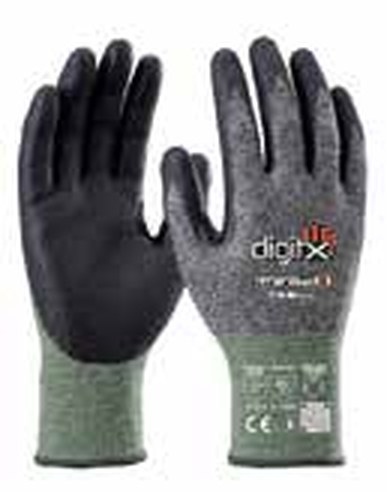
NITQROLUX-D
Nitrile for oily environments, with 100 °C contact heat to EN 407 level 1. Cut level D with gauge 18 dexterity.
- Gauge
- 18
- Coating
- Nitrile
- EN 388
- 4X42D
- EN 407
- X1XXXX · 100 °C / 15 s
- ANSI
- A4-6-3
- Sizes
- 6-12
- High-precision tasks with medium to high cut risk where dexterity comes first.
- Thin sheet metal, metal profiles, stamped parts or light machining.
- Automotive assembly, technical logistics and day-to-day industrial maintenance.
- Cut risk combined with thermal risk.
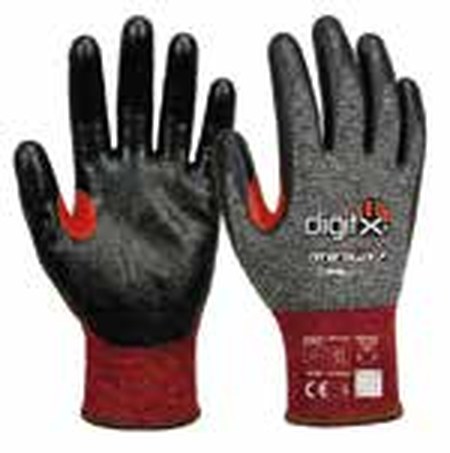
NITQROLUX-F
The top of the range: cut level F without giving up grip in oily environments, with ANSI abrasion 6.
- Gauge
- 18
- Coating
- Nitrile
- EN 388
- 4X42F
- EN 407
- X1XXXX · 100 °C / 15 s
- ANSI
- A6-6-3
- Sizes
- 6-12
- Critical risk of severe cuts or imminent danger of severing.
- Live sheet metal that has not been deburred, laser or plasma cutting and sharp burrs.
- Raw or laminated glass, recycling plants, scrap yards and heavy metalwork.
- Cut risk combined with thermal risk.
PU or nitrile: it comes down to oil
Both families protect against cuts equally. What changes is where the operator is working.
| Criterion | PU · OMNILUX and PUROLUX | Nitrile · NITQROLUX |
|---|---|---|
| Environment | Dry or slightly damp | Oil, grease, cutting fluid and swarf |
| Grip | Very good in the dry, with a fine feel | Superior on oily surfaces |
| EN 388 abrasion | Level 3 or 4 depending on the reference | Level 4, with more body in the palm |
| Contact heat | Not tested | EN 407 level 1: 100 °C for 15 s |
| Feel | Purolux 18G · Omnilux 24G, the thinnest in the range | A little more body, still gauge 18 |
| Sizes | 5-11 | 6-12 |
Dual certification: EN 388 and ANSI/ISEA 105-2024
It is the most common misreading in cut protection, and the most expensive one when it is spotted too late.
Why the marking reads 4X42F
- The X is not a zeroThe fibre blunts the blade in the Coupe test and the result is no longer valid. The standard then requires an X to be marked.
- The figure that matters is the TDM oneF means 30 N of cutting force. C means 10 N. There is three times as much between them, not one step.
- The typical mistakeComparing a 4543C with a 4X42F and concluding that the first one cuts better. The second position and the final letter measure cut with two different tests.
The 5 only says how many blade passes it withstood before the test stopped being valid; the F says it takes 30 newtons to cut the glove. One is interpreted, the other is measured.
The ANSI marking, figure by figure
It sits next to the EN 388 shield and carries three figures, each with its own scale.
- In the centre · cut resistanceScale A1 to A9, measured in grams using the TDM method. The new range sits between A4 and A6.
- Bottom left · abrasionScale 0 to 6, by number of cycles. A 6 means over 20,000 cycles against the 8,000 of the European standard.
- Bottom right · punctureScale 0 to 5, in newtons.
- Why the two scales matchIt is the same test with a different unit: newtons in Europe, grams in the United States. A high letter under EN 388 brings a high A under ANSI with it.
Which workstation each reference goes to
The same table we use to recommend a reference on the shop floor.
| Workstation or process | Reference | Why that one and not another |
|---|---|---|
| Fine assembly, electronics, inspection | 61-70 | Gauge 24. It fits in where people work without gloves today |
| Sheet metal, stamping, glass, automotive | 64-52 | Cut D at gauge 18, with reinforcement between thumb and index finger |
| Cutting and handling live edges | 63-70 | Same feel as the previous one, moving up to cut F |
| Machining with oils, recycling | 63-80 | Nitrile: grip in oil and 100 °C contact heat |
| The same ones, with high cut risk | 64-80 | Cut F without giving up grip in oily environments |
Units, sizing and certification
Range available from stock in Europe. Safetop is the official DigitX distributor, with technical documentation and samples of every reference.
- Minimum order
- 12 pairsFull box of 144 pairs.
- Sizing
- 5–11 / 6–12PU range from 5 to 11; nitrile range from 6 to 12.
- Certification
- EN + ANSIEN 388:2016+A1:2018, EN 407:2020 on the nitrile range and ANSI/ISEA 105-2024.
- Documentation
- Data sheets and samplesTechnical data sheet with declaration of conformity, PDF catalogue and samples for each reference.
Frequently asked questions
What is the difference between cut D and cut F?
The level is measured with the TDM test in ISO 13997, in newtons of cutting force. D is 15 N and F is 30 N: double. On the American scale they correspond to A4 and A6.
Why does the marking show an X in the second position?
Because the fibre blunts the blade in the Coupe test and the result is no longer valid. EN 388 then requires an X to be marked and the cut level to be given by the TDM test, which is the final letter.
Are they touchscreen gloves?
Yes. All five references work with screens and handheld terminals.
Which one do I choose if there is oil or cutting fluid at the workstation?
The nitrile range, NITQROLUX 63-80 and 64-80. PU saturates in oily environments; nitrile keeps its grip and adds 100 °C of contact heat to EN 407 level 1.
Do they withstand heat?
Only the nitrile range, and within a clear limit: EN 407 level 1, 100 °C contact for 15 seconds. They are not gloves for oven work.
What sizes do they go up to?
From 5 to 11 in the PU range and from 6 to 12 in the nitrile range.